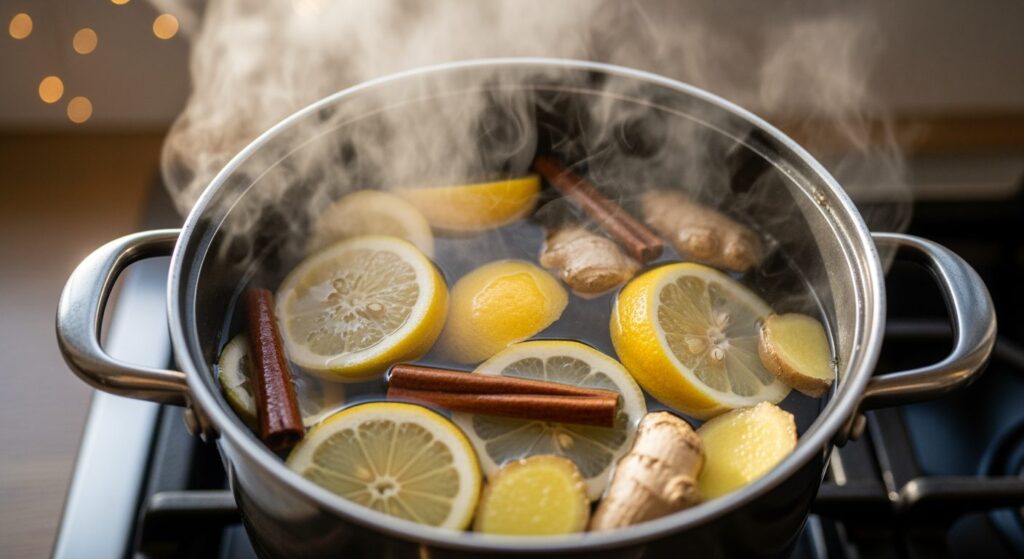
Winter home remedy: As temperatures drop and winter settles in, many households across the globe revive a time-honored tradition – boiling lemon peels with cinnamon and ginger. This aromatic ritual has persisted through generations, not merely for its inviting fragrance but for its perceived wellness benefits. The practice involves simmering these natural ingredients in water, allowing their essential oils and compounds to infuse the air and create a warming concoction. While scientific evidence varies on its effectiveness, the cultural significance and sensory experience continue to make this winter ritual a seasonal staple in many homes.
The Historical Roots of the Winter Home Remedy Tradition
The practice of boiling citrus peels with warming spices dates back centuries across multiple cultures. Before modern heating and air freshening systems, people relied on natural methods to improve indoor air quality during winter months when homes remained sealed against the cold. The combination of lemon peel, cinnamon, and ginger emerged as particularly popular because these ingredients were often available even in winter and produced potent aromas. In traditional medicine systems from Asia to Europe, these ingredients were valued not just for their scent but for their supposed ability to ward off winter ailments and boost immunity when seasonal illnesses circulated most heavily.

Understanding the Potential Benefits of the Winter Remedy Blend
The persistence of this winter home remedy tradition may be explained by the individual properties of its key ingredients. When simmered together, lemon peels release d-limonene, a compound with potential antimicrobial properties. Cinnamon contains cinnamaldehyde, which studies suggest might have anti-inflammatory effects. Ginger contributes gingerol, known for its warming sensation and possible digestive benefits. While boiling these ingredients primarily releases aromatic compounds into the air rather than creating a medicinal concentration, many practitioners report that the resulting steam and scent can help clear sinuses, create a sense of warmth, and establish a comforting atmosphere during the coldest months.

| Ingredient | Key Compound | Potential Property | Traditional Use | Aroma Profile |
|---|---|---|---|---|
| Lemon Peel | D-limonene | Antimicrobial | Air purification | Bright, citrusy |
| Cinnamon | Cinnamaldehyde | Anti-inflammatory | Warming agent | Sweet, spicy |
| Ginger | Gingerol | Anti-nausea | Digestive aid | Pungent, earthy |
| Combined Effect | Multiple | Sensory stimulation | Winter wellness | Complex, warming |
How to Prepare the Traditional Winter Home Remedy
Creating this winter remedy at home involves a simple process that can be adapted based on preference and ingredient availability. The basic method requires slicing one whole lemon and saving the peels (organic is preferable to avoid pesticide residue), breaking a cinnamon stick into pieces, and slicing fresh ginger root. These ingredients are added to a pot with water and brought to a gentle boil, then reduced to a simmer. Many practitioners recommend maintaining this simmer for at least 30 minutes, allowing the aromatic compounds to fill the home. The mixture can be topped up with water throughout the day to extend its use.
- Gather organic lemon peels from 1-2 lemons
- Break 1-2 cinnamon sticks into smaller pieces
- Slice 2-3 inches of fresh ginger root
- Combine ingredients in a medium pot with 4-6 cups water
- Bring to a gentle boil, then reduce to simmer
- Allow to simmer for 30+ minutes, adding water as needed
- Enjoy the aromatic benefits throughout your home
Modern Science and the Winter Home Remedy Tradition
While the winter ritual of boiling lemon peel, cinnamon, and ginger continues largely based on tradition and sensory experience, modern research has begun examining some of the claims surrounding these ingredients. Studies confirm that citrus oils contain compounds with antimicrobial properties, though their concentration in home preparations may be too low for significant disinfectant effects. Research on cinnamon has identified anti-inflammatory and antioxidant properties, while ginger has been studied for its potential to alleviate nausea and reduce inflammation. However, scientists caution that simply boiling these ingredients primarily creates an aromatic experience rather than a medicinal treatment. The psychological benefits of engaging in comforting seasonal rituals may contribute significantly to the perceived wellness effects.
FAQs
Q: Does boiling lemon peels kill germs?
A: Limited antimicrobial effect

Q: How long should you simmer the mixture?
A: 30-60 minutes
Q: Can you drink the mixture?
A: Yes, when properly prepared
Q: Is organic lemon necessary?
A: Preferred but optional

Q: How often should you prepare it?
A: Daily or as needed