French inheritance tax: Navigating the complexities of French succession fees can be daunting, especially when it comes to inheriting a family home. The French inheritance tax system differs significantly from many other countries, with rates that can reach up to 60% depending on your relationship to the deceased. However, there are legitimate strategies available to reduce these costs and preserve more of your family’s wealth for future generations. Understanding these options early can make a substantial difference in the amount of tax your heirs will eventually pay when inheriting your French property.
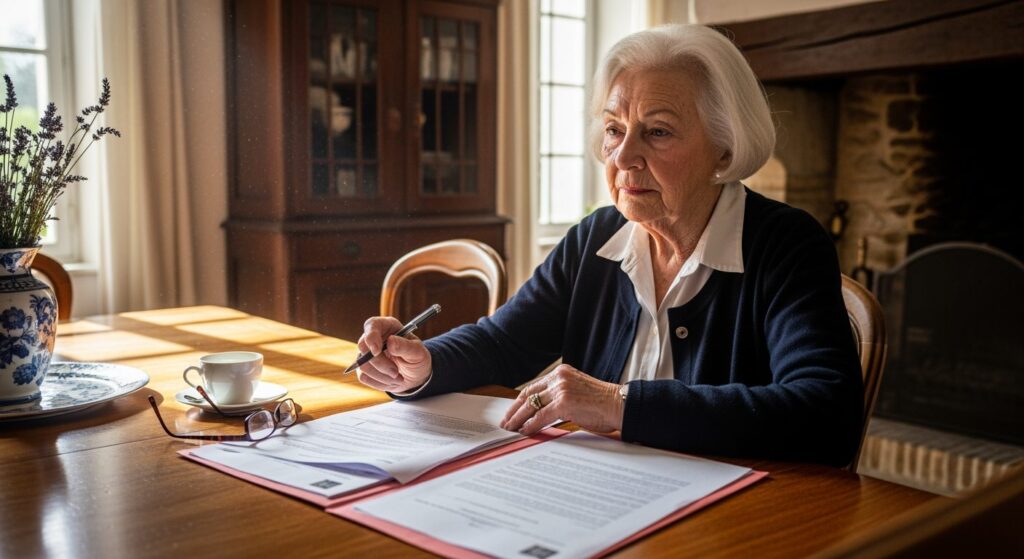
Understanding French Succession Fees on Family Homes
French inheritance tax, known as ‘droits de succession,’ applies to worldwide assets for French residents and only to French assets for non-residents. The tax rates vary dramatically based on your relationship to the deceased, with direct line relatives (children and parents) benefiting from more favorable rates compared to distant relatives or non-relatives. Each child typically receives a tax-free allowance of €100,000, while spouses and civil partners are exempt from inheritance tax altogether. However, the progressive tax rates that apply after these allowances can quickly escalate, making it essential to plan ahead if you own a family home in France.

Legal Methods to Reduce French Inheritance Tax
One of the most effective ways to minimize succession fees is through careful advance planning. The French civil code offers several legal structures that can significantly reduce the tax burden on heirs. A popular option is the ‘usufruit’ arrangement, which separates the right to use a property from its ownership. By donating the bare ownership (‘nue-propriété’) to your children while retaining the usufruit (lifetime right to use and enjoy the property), you can reduce the taxable value of the property when it eventually passes to your heirs. This arrangement can be particularly beneficial as the value of the usufruit decreases with the donor’s age, further reducing potential tax liability.

French Inheritance Tax Rates and Allowances for Family Properties
Understanding the tax rates and allowances is crucial when planning for the succession of your French family home. The French tax system provides different allowances based on the relationship between the deceased and the beneficiary. Below is a breakdown of the current inheritance tax rates and allowances in France:
| Relationship | Tax-Free Allowance | Tax Rate (First Band) | Middle Tax Bands | Highest Tax Rate |
|---|---|---|---|---|
| Children/Parents | €100,000 | 5% (up to €8,072) | 10-30% | 45% (over €1,805,677) |
| Siblings | €15,932 | 35% (up to €24,430) | N/A | 45% (over €24,430) |
| Nephews/Nieces | €7,967 | 55% (flat rate) | N/A | 55% (flat rate) |
| Other relatives | €1,594 | 55% (flat rate) | N/A | 55% (flat rate) |
| Non-relatives | €1,594 | 60% (flat rate) | N/A | 60% (flat rate) |
Strategic Options for Reducing French Inheritance Tax on Family Homes
Beyond the basic understanding of French inheritance tax, there are several strategic options that can help minimize the succession fees on your family home. Consider these practical approaches to protect your estate:
- Establish an SCI (Société Civile Immobilière) to hold the property
- Make lifetime gifts (donations) to gradually transfer ownership
- Use the ‘assurance-vie’ life insurance vehicle for tax-efficient wealth transfer
- Consider the ‘donation-partage’ for equitable distribution among children
- Implement the ‘pacte Dutreil’ for family business properties
- Explore the benefits of the European Succession Regulation
The SCI structure deserves special attention as it offers flexibility in managing and transferring property ownership. By placing your French home in an SCI, you create a company that owns the property, while family members own shares in the company. This arrangement can simplify the inheritance process and potentially reduce tax liability through gradual share transfers over time.
FAQs

Q: Are spouses exempt from French inheritance tax?
A: Yes, completely exempt
Q: What is the tax-free allowance for children?
A: €100,000 per child
Q: Can non-residents own an SCI?
A: Yes
Q: How often can you make tax-free gifts?
A: Every 15 years

Q: Is inheritance planning reversible?
A: Sometimes