Plank hold duration: The plank exercise has become a cornerstone of core training across fitness levels, but confusion persists about optimal hold times. Whether you’re a fitness novice or seasoned athlete, understanding the right plank duration for your age and fitness level is crucial for building core strength effectively. Recent fitness research suggests that contrary to popular challenges promoting multi-minute holds, shorter, more intense planks often yield better results. The ideal plank duration varies significantly based on age, fitness level, and specific goals – making personalized approaches more effective than one-size-fits-all recommendations.
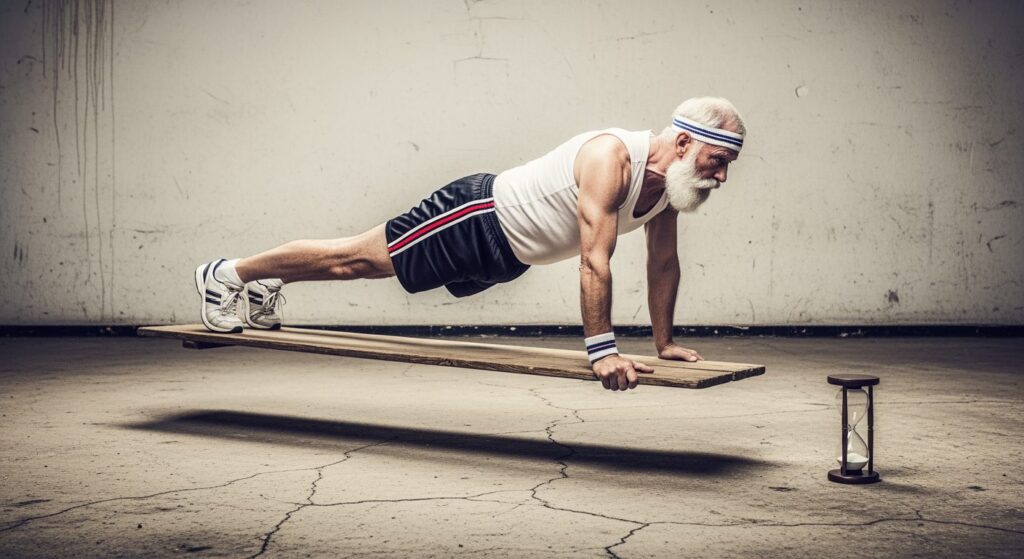
Age-Appropriate Plank Hold Times for Maximum Core Strength
The optimal plank hold duration varies significantly across different age groups, with each life stage requiring specific approaches to core training. For younger adults in their 20s and 30s, research suggests starting with 30-second holds and gradually progressing to 60-90 seconds as strength improves. Middle-aged individuals (40s-50s) benefit from 20-45 second holds with proper form prioritized over duration. Seniors over 60 should begin with modified planks (from knees or against a wall) for 10-30 seconds, focusing on stability and breathing technique rather than endurance. These age-specific guidelines ensure effective core strengthening while minimizing injury risk and accommodating natural physiological changes that occur throughout life.

Plank Duration Guidelines Based on Fitness Experience Levels
Your current fitness level plays a crucial role in determining appropriate plank hold durations for optimal core development. Beginners should start conservatively with 10-20 second holds, focusing primarily on maintaining proper form with a neutral spine and engaged core. As form improves, gradually increase duration by 5-10 seconds weekly. Intermediate exercisers typically benefit from 30-60 second holds, incorporating variations like side planks or plank reaches once basic form is mastered. Advanced fitness enthusiasts can aim for 60-90 second holds or transition to progressive variations that add movement or instability rather than extending duration indefinitely. The key principle across all levels remains quality over quantity – a shorter, properly executed plank delivers superior results to longer holds with compromised form.

Effective Plank Hold Progression Timeline for Core Strength Development
A structured progression timeline is essential for safely building plank endurance and core strength over time. Begin with an assessment of your current capacity by holding a plank with proper form until fatigue begins (not failure). From this baseline, implement a systematic progression plan that increases duration gradually while maintaining perfect technique. Most fitness experts recommend increasing hold times by 5-10 seconds weekly for beginners and 10-15 seconds for intermediate practitioners. This measured approach allows connective tissues and stabilizing muscles to adapt properly, reducing injury risk while building sustainable strength. The table below outlines a sample 8-week progression plan suitable for most individuals looking to improve their plank hold duration and core strength.
| Week | Beginner Hold Time | Intermediate Hold Time | Advanced Hold Time | Weekly Focus | Rest Between Sets |
|---|---|---|---|---|---|
| Week 1 | 10-15 seconds | 30-45 seconds | 60-75 seconds | Form mastery | 60 seconds |
| Week 2 | 15-20 seconds | 40-50 seconds | 70-85 seconds | Breathing control | 45 seconds |
| Week 3 | 20-25 seconds | 45-55 seconds | 75-90 seconds | Core engagement | 45 seconds |
| Week 4 | 25-30 seconds | 50-60 seconds | Add variations | Endurance building | 30 seconds |
| Week 5 | 30-35 seconds | 55-65 seconds | Add movement | Stability challenge | 30 seconds |
| Week 6 | 35-40 seconds | 60-70 seconds | Add resistance | Strength focus | 30 seconds |
| Week 7 | 40-45 seconds | 65-75 seconds | Complex variations | Power development | 20 seconds |
| Week 8 | 45-50 seconds | 70-80 seconds | Integrated movements | Functional application | 20 seconds |
Common Plank Hold Duration Myths Debunked by Fitness Experts
Despite the plank’s popularity, several persistent myths about hold duration continue to circulate in fitness communities. Understanding the science behind effective plank training helps separate fact from fiction. The most damaging misconception is that longer holds automatically produce better results, when research consistently shows diminishing returns after certain thresholds. Another prevalent myth suggests that everyone should aim for the same benchmark duration regardless of individual factors. Fitness experts emphasize that quality always trumps quantity, and proper form activation delivers superior results to extended holds with poor technique.
- Myth: Longer planks are always better (Truth: After 2 minutes, benefits diminish significantly)
- Myth: Everyone should aim for the same hold time (Truth: Individual factors determine optimal duration)
- Myth: Daily planking is necessary for results (Truth: Rest days are essential for muscle recovery)
- Myth: Only standard planks build core strength (Truth: Variations target different muscle groups)
- Myth: Planks alone create six-pack abs (Truth: Body composition and comprehensive training matter more)
- Myth: Pain during planks means it’s working (Truth: Sharp pain indicates improper form or potential injury)
- Myth: Planks only work the abdominals (Truth: They engage multiple muscle groups throughout the body)
FAQs

Q: What’s the ideal plank duration for beginners?
A: 10-30 seconds
Q: Should seniors do full planks?
A: Modified versions first
 The Ordinary New Serum Nicknamed Filler in a Bottle Gave My Skin a Youthful Look in My 40s
Q: How often should I plank?
A: 3-4 times